Hard Water Scale vs Dirt: The Reality of Restoring Shower Tiles
Ideal Carpet & Upholstery Cleaning • August 25, 2026
Restoring the original color of bathroom floors and shower stalls is one of the most common requests we receive. The team at Ideal Carpet & Upholstery Cleaning regularly inspects bathrooms in Tantalon that look permanently dirty despite constant scrubbing by the homeowner. It is incredibly frustrating to spend hours working on a shower enclosure only to have it dry looking exactly the same as when you started.
The confusion stems from treating every dark mark or cloudy film as normal household dirt. Bathroom environments suffer from heavy mineral deposits that require an entirely different approach than sweeping or mopping. We want to outline the realistic expectations of professional tile restoration and explain exactly why your current efforts are falling short.
In This Article
- The Visual Trick of Hard Water Stains
- Why Standard Scrubbing Cannot Remove Mineral Scale
- The Real Timeline for Professional Tile Restoration
- Frequently Asked Questions
The Visual Trick of Hard Water Stains
Hard water scale is a deceptive problem because it mimics the appearance of standard soap scum or tracked in mud. When mineral rich water evaporates on your shower walls, it leaves behind microscopic deposits of calcium and magnesium. These clear deposits build up layer by layer over the months.
Eventually, this mineral shell becomes porous and begins trapping daily dirt, body oils, and colored soap dyes. You look at the tile and see brown or gray grime. You assume the surface is just dirty. The reality is that the dirt is locked inside a hard crust of stone like minerals. Until that mineral shell is chemically dissolved, the dirt trapped inside it is not going anywhere.
→ A quick tip to remember: If a stain on your shower wall feels rough or chalky to the touch when completely dry, you are dealing with mineral scale rather than surface grease.
Why Standard Scrubbing Cannot Remove Mineral Scale
Many homeowners severely underestimate the physical hardness of calcium deposits on their bathroom surfaces. Standard bathroom cleaners are highly alkaline because they are designed to melt body fats and soap scum. They have absolutely no chemical effect on hard water minerals.
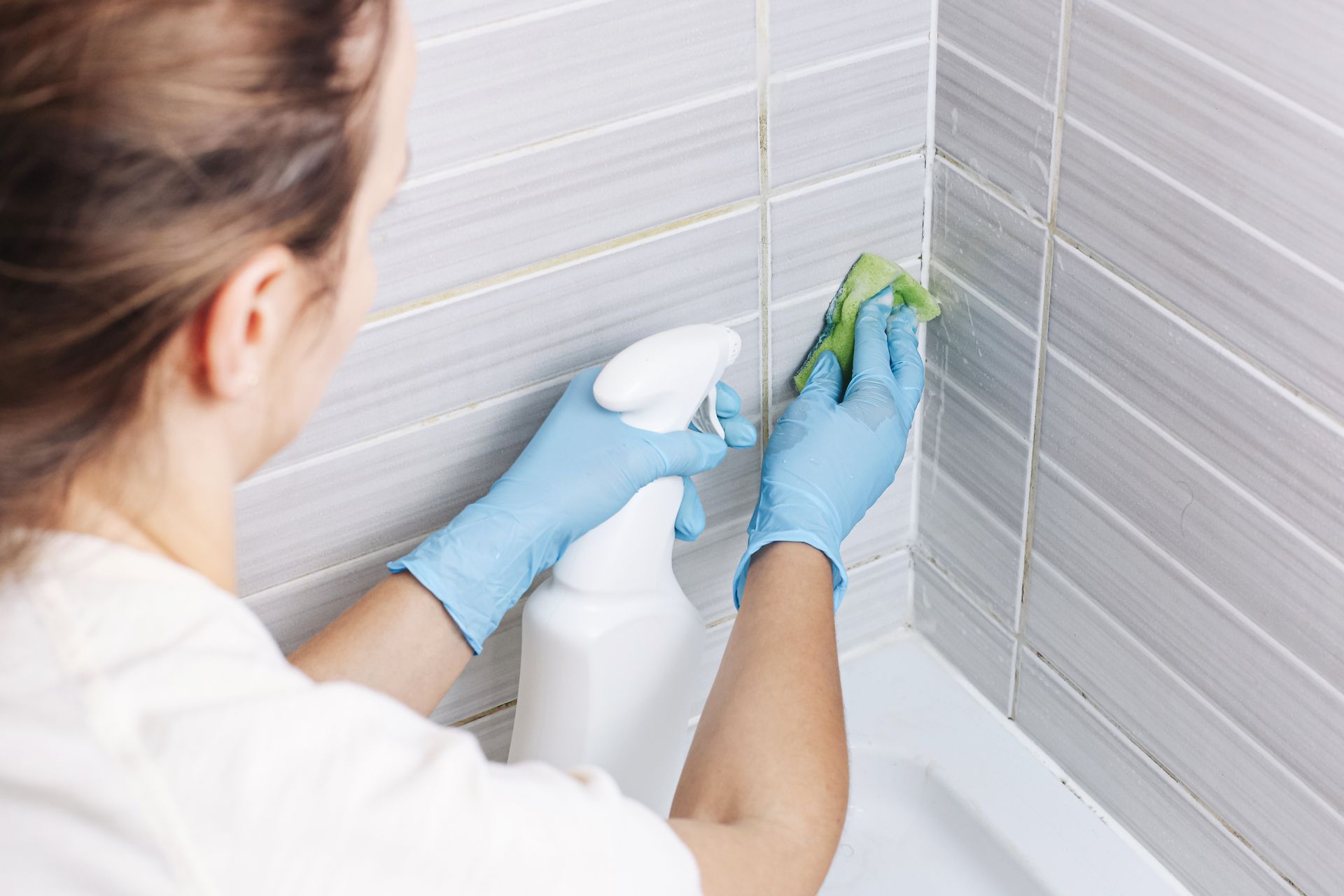
When you apply a standard cleaner and scrub aggressively with a brush, you are only smearing the surface oils around. The abrasive brush simply slides over the rock hard calcium deposits without breaking them down. Continuing to scrub harder usually just scratches the protective glaze on the ceramic tile and damages the surrounding grout lines. Professional tile and grout cleaning relies on specific acidic agents to safely dissolve the mineral bonds without relying on brute force friction.
→ From a professional standpoint: Applying more physical pressure to hard water scale will only scratch your expensive tile finish.
The Real Timeline for Professional Tile Restoration
Professional restoration is a scientific process that takes patience and the correct dwell times. When we treat heavily scaled showers, we apply an eco-friendly acidic dwell solution that reacts with the calcium. This product must sit on the surface to slowly eat through the hardened layers.
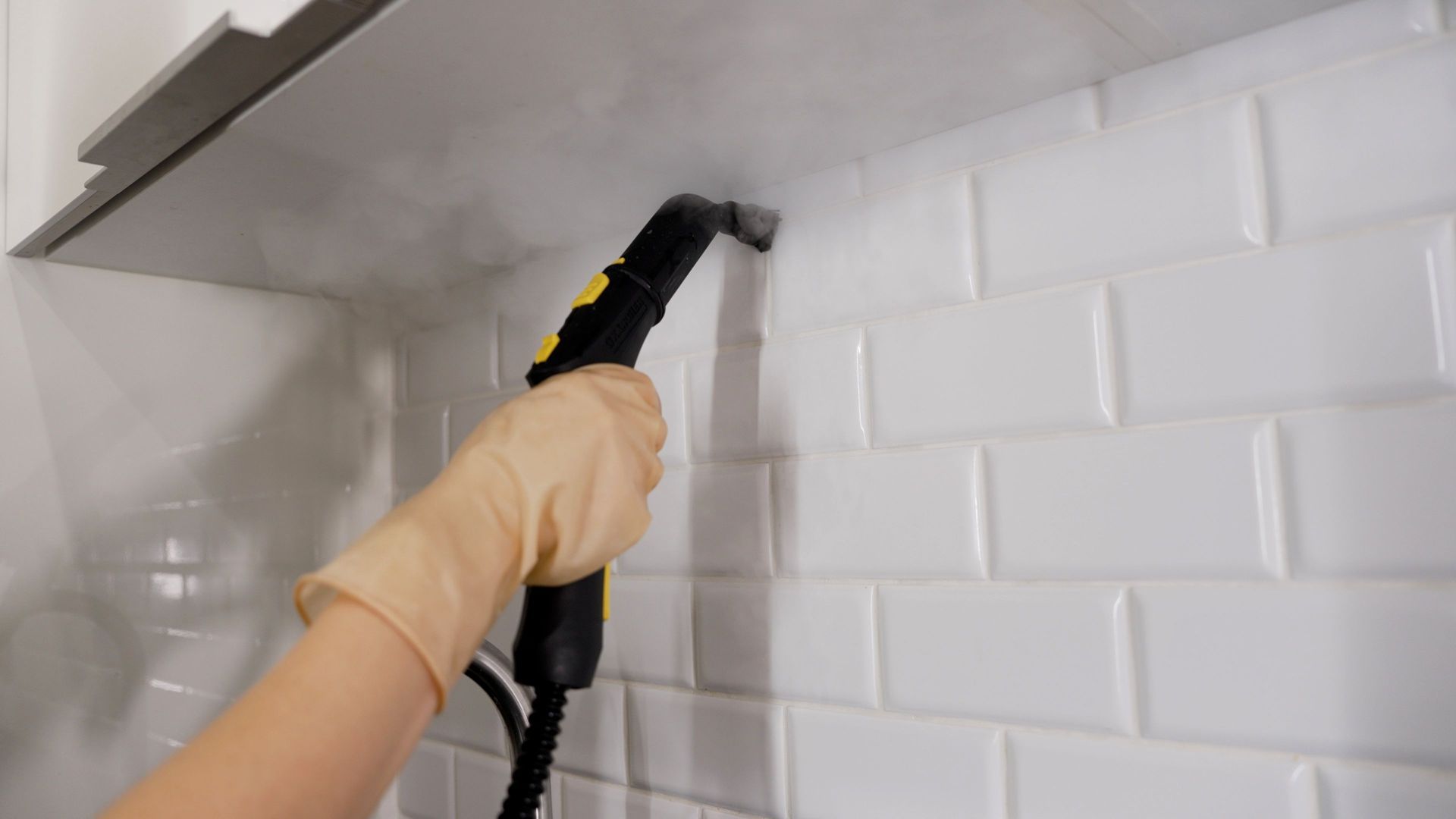
Once the minerals are soft, we use high pressure steam and specialized extraction tools to lift the slurry away safely. It is important to know that grout lines heavily etched by years of hard water damage may show slight textural changes even after they are perfectly clean. The restoration removes the foreign contaminants entirely but it cannot replace missing grout sand that was eaten away by long term mineral neglect. Applying a protective sealant after the extraction helps restore the uniform look and blocks future buildup.
Frequently Asked Questions
Does hard water ruin tile grout?
Yes, severe hard water left untreated over a long period will degrade the physical structure of your grout. The minerals expand as they dry and wedge themselves into the porous grout lines. This constant microscopic expansion weakens the cement base and eventually causes the grout to crack or wash away during routine cleaning.
Why does shower grout turn white and chalky?
Shower grout turns white and chalky primarily due to heavy calcium deposits left behind by evaporating tap water. This phenomenon is known as efflorescence. As the water evaporates from the wet shower walls, it pulls hidden mineral salts to the surface where they harden into a visible white crust over the grout lines.
Is it possible to restore heavily scaled shower tiles?
Yes, professional extraction can fully restore heavily scaled tiles to their original shine. We use safe chemical dissolving agents that target the specific mineral makeup of the scale without harming the ceramic glaze. Once the crust is broken down, we extract the residue to reveal the perfectly clean tile hidden underneath.
Reclaim Your Bathroom Surfaces
Understanding the exact nature of the buildup in your shower allows you to stop wasting energy on ineffective scrubbing. Professional extraction handles the tough mineral bonds so you do not have to damage your fixtures trying to forcefully remove them. Stop battling with stubborn cloudy tiles and chalky grout lines. Give us a call today so we can dissolve the heavy scale and bring the original shine back to your bathroom.
Share This Blog